Showing posts with label dental tourism in shimla. Show all posts

Sunday, October 25, 2009

A Power Tool for Dentistry


There are so many exciting and obvious benefits to cosmetic imaging, that it has become commonly accepted as a powerful tool in dentistry. Of course, how you incorporate cosmetic imaging into your practice will depend upon your own needs and practice philosophy. Cosmetic imaging is not just for "selling" cosmetic cases. It is a powerful diagnostic and treatment planning tool whose benefits should not be overlooked.

Professional image editing software: Many dentists have heard of PhotoShop and PhotoShop-like programs. These are image editing programs used by graphic artists. They have no dental related interface or link capability. Typically, these are incredibly sophisticated programs with capabilities far beyond dental-specific software. But with the proper knowledge of the tools they can easily and precisely accomplish all dental treatment simulations. Such programs, with a trained person at the controls, are especially well suited to creating realistic simulations.In fact, if desired, it's actually possible with just a click of the mouse to import each image created by these programs into the modern practice management system's image database. In any case, these programs can manage their own images with unbeatable ease.

Combining professional software and made for dentistry: But learning to use a professional imaging program can be a daunting task. Creating a meaningful smile library formatted to use for pasting into simulations can be incredibly time consuming. Software programs like Digital Dentist is simply a fast track training system designed to teach you how to use one of the most powerful image editing programs in the industry today, Paint Shop Pro. Digital Dentist combines the program with dental specific training and a library of ready-to-use smile designs.Our imaging module provides the software tools to perform simulations of intended aesthetic and restorative treatments. Cosmetic Imaging allows both the patient and dentist to visualize the appearance and functional benefits of proposed treatment recommendations from simulating a simple tooth whitening procedure to a full mouth rehabilitation.
Dr. Goma uses special cosmetic imaging software that allows him to show you, often in the same visit, what your smile will look like after a specific cosmetic procedure. Take advantage of Free Cosmetic Consultation and see how beautiful your smile can be!

Tuesday, October 20, 2009

Lasers For The Perfect Smile


Incredibly, dentists have been using laser treatment for over 15 years. Despite some early skepticism the industry is coming to realize that lasers may have a key part to play in the future of dentistry. Their accuracy and all round benefits mean they are becoming ever more popular in dental treatments.

Dentists use lasers for a variety of purposes. They can be used to remove decay and prepare a tooth for a filling and then used to cure or harden the filling itself. They can also be used to reshape gums and remove bacteria during root canal procedures. Other uses include removing small amounts of tissue for biopsy, especially useful in the fight against cancer, and to activate agents in tooth whitening procedures.

Lasers work by delivering energy in the form of light and can be used to cut or vaporize tissue as well as acting as a catalyst for other treatments. They are particularly useful as they can often minimise the pain and anxiety felt by patients and also reduce swelling and bleeding during dental treatments. Also because of the high levels of heat used there is often a reduced risk of post-procedural infection as the laser acts as a sterilizing agent.

Lasers are an innovative and precise dentistry tool that more and more dentists are using because of the obvious advantages to both themselves and dentists. Ask your dentist about laser treatment and take the pain out of your trip to the dentist.For more information on dental lasers please call goma dental on 177-645-0704.

Friday, October 9, 2009

Mouthguard :Ideal for sporting activities


As you may be aware, it only takes one blow to the mouth to cause gum injury, tooth loss, and nerve damage. Regardless of whether that blow comes from a cricketball or a fall, it is very important to do what you can to protect your teeth during certain activities. In most cases, wearing a mouth guard will prevent injury to your mouth. Fortunately, when you visit a dentist in Shimla, you will be able to obtain a custom fit mouth guard.

Consider a situation where you would normally wear some kind of helmet. This may include working in construction or riding a bicycle, as well as playing some type of sport. As a general rule, if you are concerned about head injuries, you should be equally concerned about dental ones. This is especially important to consider if you have children that play sports or ride bikes. A custom mouth guard created by a dentist is the only type that will ensure inner mouth structures receive the maximum amount of protection.
Typically, you will find that the procedure for obtaining a custom mouth guard is fairly painless and easy. Your dentist will make a model of your teeth, and then create the mouth guard from soft plastic. Unlike the virtually useless mouth guards sold in most stores, you will have very little, if any difficulty breathing or talking while wearing the mouth guard designed by a dentist. At the same time, if something hits your mouth, the teeth, gums, and inner cheek tissue will all be protected.
Even though you may not engage in activities that require the use of a mouth guard, it is crucial to consider the activities of your children. Unfortunately, even one injury during gym or recess may undo years of dental alignments, cleanings, and cavity management. At the same time, the last thing you will want is for your child to suffer with long term nerve damage. Therefore, it will be best to have custom mouth guards made as quickly as possible.

Friday, September 18, 2009

Dentistry In High Magnification


In all phases of dentistry, the increased visual detail provided by high magnification reduces ambiguity in diagnosis and treatment decision-making, increases control in treatment implementation, allows a dentist to produce more ergonomic restorations that are less prone to recurrent decay, and arguably improves clinical outcomes compared to work performed with unaided vision. High magnification enhances a dentist’s ability to diagnose caries and cracks in teeth, distinguish between different colors intraorally, detect the interfaces between different surfaces and materials, detect microscopic interferences in fixed and removable metal frameworks, adjust occlusal prematurities, and polish restorations.There are several general reasons why high-powered magnification provides more clinically relevant visual information to general dentists than unaided vision.
High magnification improves a dentist’s ability to differentiate between subtle shades of color intraorally, which is important when diagnosing and treating dental pathology.Magnification allows dentists performing endodontic procedures to better identify anatomical landmarks within the pulp chamber—including the sides, overhanging walls that are remnants of the pulp chamber roof, and initial perforations into the pulp—and to differentiate between the pulp horns and the main body of pulp within the chamber. Magnification aids in locating the mesiobuccal-2 canal and other accessory canals of maxillary molars.High levels of magnification increase the aggregate amount of visual information available to dentists for diagnosing and treating dental pathology, which may allow dentists to develop ways of solving a given dental problem that differ from those used by dentists who use unaided vision. Dentists who use high magnification may be able to develop expertise at an accelerated rate. Dentists who use high magnification may diagnose and treat dental pathology with greater complexity and are more likely to be certain about the causes of a patient’s symptoms, compared to dentists who use unaided vision.

Thursday, September 17, 2009

Single-Visit CEREC dentistry


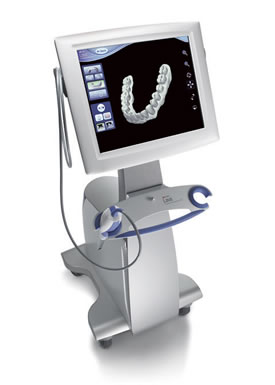
CEREC is a revolutionary system that enables your dentist to design, fabricate and fit a new crown, veneer, onlay or inlay in a single visit, a procedure that would normally take at least two weeks, if not more!The tooth is prtepared in ususal way before fitting a crown or a veneer. At this point, instead of using "dental putty" to take an impression of your tooth, a digital image is taken using a special camera. This image is then converted into a 3D computerised model of your tooth, which is used as a guide to design your new restoration. Once the newly designed tooth is finalised, this data is sent to an onsite milling machine, which fabricates your new tooth from a high-quality ceramic block. The milling process can take anywhere from as little as 6 minutes to 30 minutes depending on the exact technology and complexity of the tooth. The latest CEREC MCXL machine can mill a crown in as little as 6 minutes.The ceramic blocks come in a wide variety of shades and colours, and your tooth will be selected to match your surrounding teeth. Once the crown or veneer has been milled, we may characterise it and stain it to match your surrounding teeth, before either polishing it or glazing it in a furnace. Your new restoration will then be cemented into place onto your prepared tooth.
There are several advantages to having treatment with CEREC over conventional, laboratory-made restorations:
Everything is carried out in a single visit - you only need to visit the dentist once - take one day away from your work or life to have the procedure - instead of the usual two or three visits.
Only one set of local anaesthetic injections - since the entire procedure can be carried out within the hour, you only need to have one lot of injections.
No temporary restorations - if you have lab-made veneers, you would require temporary veneers during the wait for your new teeth. These have been known to fall off and cause problems, which is a step that is omitted with CEREC restorations.
You would probably think that restorations made with this state-of-the-art technology would cost a lot more than standard lab-made veneers and crowns. However, there is often very little - if any - difference in price, because you only need one appointment with the dentist and there are no laboratory fees to incorporate into the price of your treatment. CEREC crowns can vary in price from as little as 15000 up to 28000 per tooth. Many dentists offer interest-free finance plans to help spread the costs of your treatment.

Thursday, September 10, 2009

Dental Jewels: Sparkle In Your Smile


If your teeth are very nice but you desire to improve your beauty even more, you can decorate your teeth with a jewel. Dental jewel is a special decoration, for example diamond or another stone, which can be attached to your teeth without consequences.It is necessary to consider your expectations and realize that the dental jewel will be a new, significant part of your look. Be prepared that people can stare at you, most of them will appreciate the beauty of your decorated smile, but some of them can consider it too extravagant.The dental jewel is attached to the tooth with a substance, which does not damage the enamel, it is therefore possible to remove it or change it without consequences. During the consultation with the doctor on Goma Dental Clinic, you will choose the jewel and the tooth, to which the jewel should be attached. Our doctor will check the condition of your tooth, if it is too damaged, he can recommend to attach the jewel to another tooth.
The application procedure:
The application of dental jewel is completely painless and does not require any anesthesia.After a perfect mouth hygiene, the jewel is stuck on the tooth with an adhesive substance, similar to the substance used to fix the retainer. This process does not damage the enamel, which is a big advantage.After the application you will probably need few hours to get used to the small jewel in the mouth. The doctor provides you with all instructions concerning the care of dental jewels. Most important is perfect mouth hygiene.The dental jewel can last a relatively long time, it is however limited by the stress put on the decorated tooth and dental care. If the jewel gets loose unexpectedly, it is possible to reattach it without consequences

Wednesday, September 9, 2009

Sedation Dentistry- Benifits


Sedation Dentistry offers patients the ability to conquer their fear of the dentist. Many people today, continue to put off seeing the dentist; some for up to several years. This is generally the case due to the fear and discomfort generally associated with dental restorations. Sedation Dentistry offers the solution to patients suffering from dental anxiety. You may benefit from Sedation Dentistry if you;
- Dislike dental Injections
- Dont like the noise of dental equipment - drills, suction hoses, etc.
- Gag easily and hate the taste during dental procedures
- Cannot handle pain well
- If you need to undergo a complex dental procedure or a treatment that will consume a long period of time
Sedation dentistry enables patients who have a fear of the dentist to undergo dental treatment. Most patients, who have utilized Sedation Dentistry during a procedure, have no memory of their treatment. Sedation Dentistry can be highly beneficial to patients who have deferred seeing a dentist, yet wish to attain healthy teeth and gums and a beautiful smile.

Dental Implants Vs Dentures


Whilst the loss of a tooth can inhibit our ability to not only function properly when eating, drinking and speaking, it can also cause us to lose our self-confidence and become withdrawn and uncomfortable. As a range of treatments now offers us a choice in how to overcome these problems, we are left to decide which methods might suit us best.Where tooth loss can be combated using either a dental implant or dentures, the decision between which to choose can be a difficult one.Dental implant procedures provide you with a permanent solution to the problem of a lost tooth or teeth, with a recreated tooth effectively replacing your missing teeth. A fully functional device, the dental implant can be created to replicate your remaining teeth, looking and feeling completely natural, whilst helping to prevent further problems in decay and deterioration for the remainder of your mouth and gums.

Tuesday, September 8, 2009

Aesthetic Laser Dentistry

With the aesthetic zone being absolutely critical to a patient’s external appearance and inner emotions, orchestrating a bioesthetic result is mandatory. Too often, this is complicated when aesthetic desires infringe on the health of the periodontal complex. This is often true when biologic width violations have occurred iatrogenically. Many factors may contribute to these failures, the two main culprits being intracrevicular margin location and over contoured restorations. Not only is plaque accumulation problematic, but the supracrestal fibers also become interrupted, causing the tissues to become further inflamed and aesthetically unmanageable. Dental lasers have evolved considerably as an adjunctive and alternative treatment to safely, conservatively, and reliably decrease bacterial levels and improve the hard and soft tissue contours.From a patient-friendly standpoint, less need for suturing and shorter healing times improves case acceptance for doing ideal dentistry. In selected cases, such as the one presented in this article, minimally invasive laser procedures, with precise restorative planning and technique, can satisfy aesthetic and functional parameters. Furthermore, patients can enjoy optimal results more comfortably and efficiently.The use of a hard/soft tissue laser is a wonderful adjunctive tool for cosmetic and restorative dentistry. The studies demonstrate that this type of laser technology gives dentists the ability to make significant soft and hard tissue changes while being minimally invasive. These changes not only improve the final aesthetic outcome of the case but also provide the physiologic functional parameters required for successful dentistry.

For more information on Aesthetic Laser Dentistry, Dental Implants in Himachal, Dental Tourism in India visit - HimachalDental.com

Monday, May 21, 2007

Goma Dental and Implant Center - A Milestone Reached


We have a Dental Clinic in Shimla, in the name of Goma Dental Clinic and Implant Center. The Clinic is run by Dr. Nisha Goma who has worked as General Dental Surgeon in Zonal Hospital, Solan, HP, India, and as Senior Resident in MNDAV Dental College, Tatul, Solan, HP, India and by Dr. Amandeep Goma who has worked as dental surgeon in Shimla Sanitarium & Hospital. The Clinic was established in 2003. It is Situated on the National Highway and is Drive in. ( no need of walking as in other places in Shimla )
The clinic is equipped with all the Ultra Modern Facilities including Latest Imported Dental Chair, X-Ray, RVG, Intra Oral Camera, Sterilization Unit, Ultra Sonic Scaling, Painless Extractions Under Local Anaesthesia, Tooth Coloured Filling, Silver Filling, Removable Partial Denture, Complete Denture, Crown And Bridge Work, Root Canal Treatment, Treatment of Irregular Teeth, Smile Designing, Dental Implants etc.
The Lab Work is done in the best labs of Chandigarh & New Delhi.Removable partial dentures are delivered the same day whereas the Complete dentures about 3 days. The clinic is registered in the Directory of Dental Tourism in India.

We never compromise in the Quality and try to deliver the best. We assure to provide the best services and never give our patients a chance to complain against us.
For more information on any Dental enquiry and other Dental Services in Shimla, you may visit - Goma Dental and Implant Center, Shimla - HimachalDental.com.